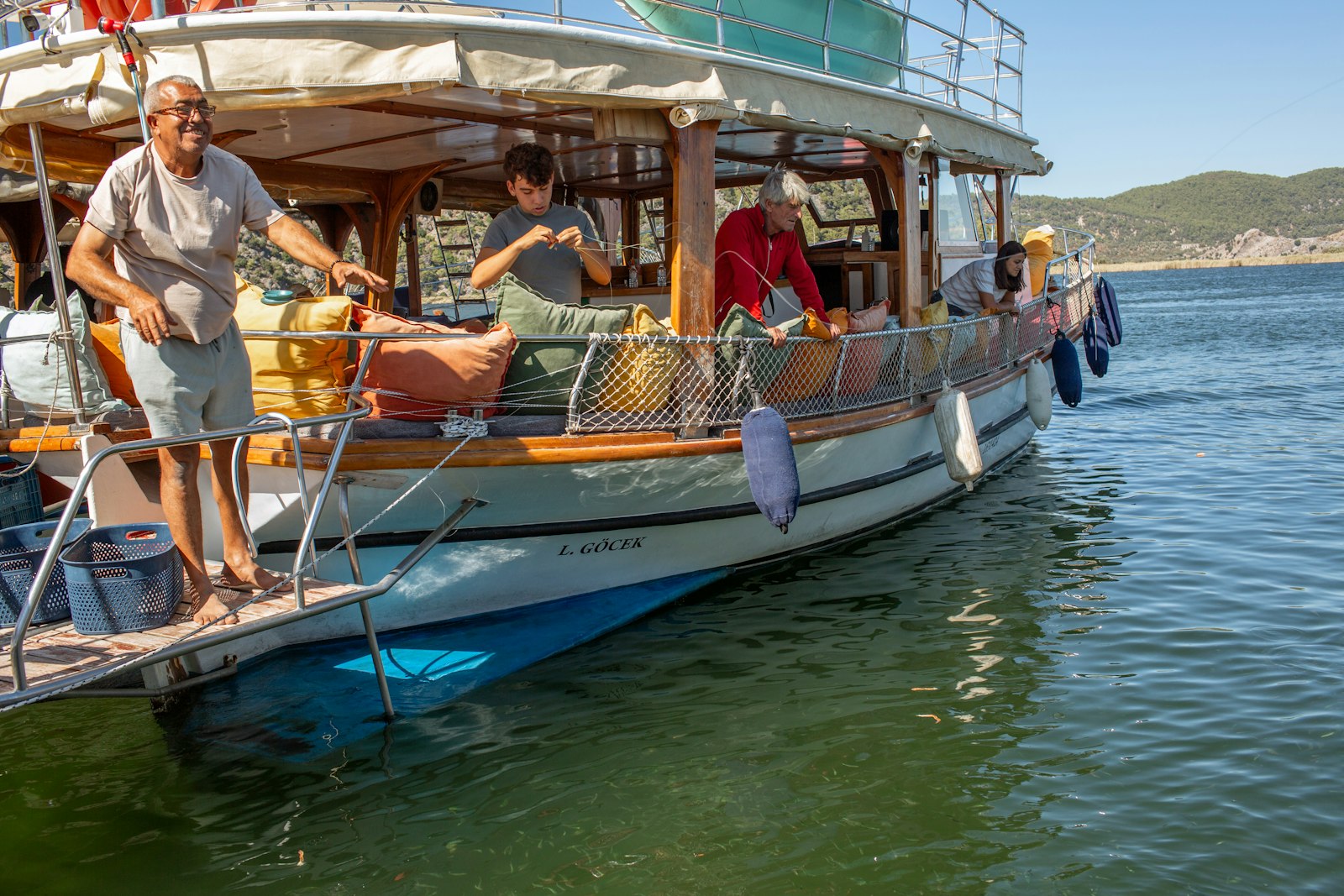
A classic wooden boat is the one charter choice people make for the vessel rather than the destination. Nobody books one because it is the practical option. They book it because a 1930s hull with oiled timber and bronze fittings is a different thing from a production hull, and because the boat becomes part of the story of the trip.
Which is a good reason, as long as you know what else comes with it.
What these boats are
Most charter classics were built between the 1920s and the 1970s, usually as one-off designs or in small runs of sisterships, and most have a documented history attached — a designer, an original owner, a race or a crossing.
What you notice aboard is the material. Oiled wood, traditional joinery, bronze rather than stainless, and a patina that cannot be manufactured. Below deck the proportions are different from a modern boat: narrower, darker, more furniture-like, with less volume for the length because the hull is narrow where a modern one is beamy.
Most charter examples have been meticulously maintained or thoughtfully restored, frequently with a modernised interior behind the original character — on the larger yachts, an original exterior with a refitted interior is the norm rather than the exception. Wooden boats in charter fleets are a small category and each one is specific, so what is true of one is not true of the next.
What you give up
Three things, stated plainly, because the brochures do not.
Space. A fifty-foot classic has the interior volume of a modern forty-footer, sometimes less. Cabins are small, headroom is lower, and stowage is limited. For four people this is charming; for eight it is cramped.
Modern conveniences. Air conditioning, a generator, a bow thruster, electric winches, a swim platform — some classics have them and many do not. The swim platform matters more than people expect, because getting back aboard a high-sided wooden hull from the water is a ladder rather than a staircase.
Polish. One honest assessment of classic charters put it as “this is not love boat cruising”, and that remains fair. Things are more manual, the systems are older, and the boat has moods.
If space and systems matter more than character, a modern cruiser or a catamaran gives you more of both for less money — the comparison is in the route through all eleven types.
Why they cost what they cost
A wooden boat is painted and varnished at least annually and hauled out for serious overhauls periodically, all at considerable expense. Chartering is frequently how an owner funds that, which is why these boats are available at all.
So expect the rate to sit above a production boat of the same length — you are paying for maintenance hours rather than accommodation. Against that, many classics come with a crew included, which changes the comparison: a crewed classic against a bareboat modern boat is not a like-for-like price. The cost structure is in how charter prices are built, and the crewed economics in the APA explained.
Crew, and how these boats are sailed
Almost all classic charters are skippered or fully crewed, and that is appropriate rather than a limitation. Handling a long-keeled wooden boat with a heavy rig is a different skill from sailing a modern fin-keeled production yacht, and the crew frequently know that specific boat intimately.
On some traditional yachts the crew still work the boat the old way — hanked sails, manual winches, lines coiled properly — and watching that competently done is part of the experience. On others the rig has been modernised quietly behind the appearance.
Smaller day-charter classics are typically skippered by a licensed captain, with certified passenger limits — frequently twelve. The three formats covers the distinction, and what a skipper does matters more here than on a modern boat.
Where a classic is the right choice
A day charter, for an occasion. This is the strongest case by some distance. A wooden boat for an afternoon — a birthday, an anniversary, a company event, a proposal — delivers everything the type is good at and none of what it is bad at, because nobody is sleeping aboard. Occasions aboard and corporate charters both point here, and why a day is a different product explains the economics.
A small crew on a short trip. Two couples for three or four nights, where the boat is the point and nobody needs a wardrobe.
Anyone who actually cares about boats. If you have read about these designs, a week aboard one is a different kind of holiday from a week on a production hull, and the compromises will not bother you.
A photograph-driven trip. Said without cynicism: these boats look extraordinary, and if that is part of why you are chartering, nothing modern competes.
Where it is the wrong choice
A family with small children — the decks are beautiful and hard, the companionways are steep, and netting a classic’s guardrails is not always possible. Sailing with a baby or toddler points firmly at a catamaran instead.
A large group needing cabins. Use a gulet, which is itself a traditional wooden boat built for exactly this and with the space a yacht lacks — see what a gulet charter is and the large-group comparison.
A crew who want to cover distance. These boats are not fast and not close-winded, and a week built around mileage will be frustrating.
What to ask before booking
More than usual, because each boat is unique and there is no model specification to fall back on.
Ask for photographs of the actual cabins and the actual heads, not the boat under sail. Ask the headroom. Ask whether there is an engine for calms and tight harbours, and how powerful. Ask about bedding and bathroom arrangements explicitly if you are sleeping aboard.
Ask the alcohol and catering policy, which on classics is more varied than elsewhere — some operators let you bring your own food and drink while prohibiting spirits, and some set a minimum age for guests.
And ask the weather policy, because a heavy traditional boat is more conditions-dependent than a modern one, and a day charter may be moved. That sits with the rest of the terms in the contract lines worth reading twice and cancellation and insurance.
Classics appear in small numbers throughout the Mediterranean, with the best supply in Croatia, Italy and Turkey, where the wooden-boat tradition never stopped. Book early: there are very few of them.