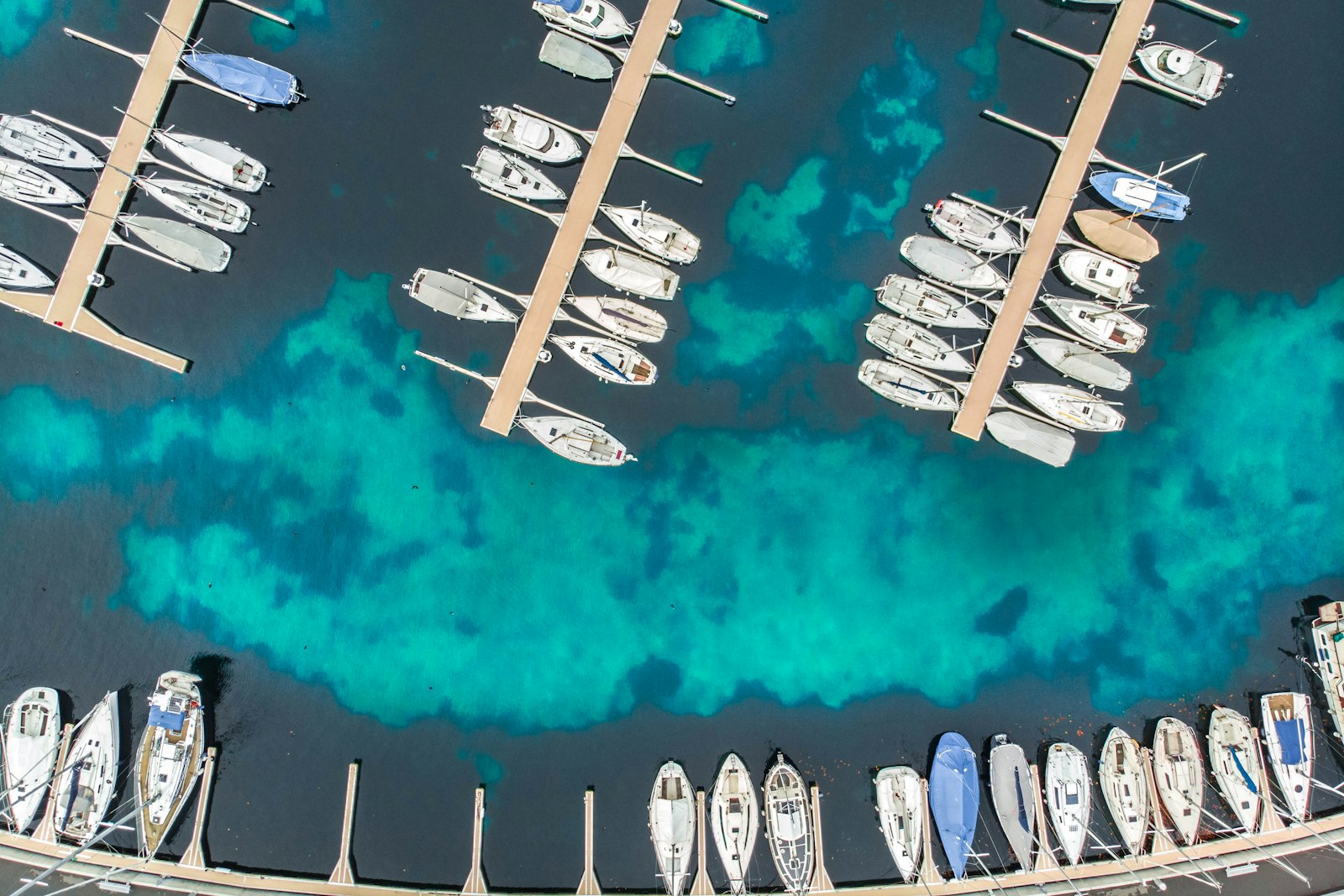
Most people choose a boat the wrong way round. They pick a length, then a price, then discover on the second morning that the thing they actually needed was a cockpit everybody could sit in at once, or a shallow enough draft to reach the bay they came for.
Type decides the holiday. Length only decides how many of you fit. This is the order the decision works in, and what each option genuinely gives you.
Four questions, answered honestly, decide it
Who is coming? Not how many — who. One person who is nervous at sea, or cannot swim, or is bringing a toddler, outweighs five who are relaxed. The boat has to work for the least comfortable person aboard.
Do you want to sail, or to arrive? These are different holidays and the honest answer is usually one or the other. Sailing means the wind sets the schedule. Arriving means the engine does, and you pay for it in fuel.
How far are you going? A week among four islands is a different requirement from a week covering two hundred miles.
What is the budget, all in? Not the charter fee. The charter fee plus berths plus fuel, because the type you pick moves both of those as much as it moves the headline.
The three mainstream answers
A sailing boat is the default and the cheapest route to a week on the water. One hull, one mast, the most boats available and the widest choice of dates. It heels, which some people love and some people quietly hate. Interior space is modest for the length, because the hull is narrow where it meets the water. Fuel is almost a rounding error. If sailing is the point rather than the transport, this is the answer — and in Croatia and Greece it is also where the depth of fleet is.
A multihull — in practice a catamaran — is the type that has taken over family chartering, and for good reasons. It stays level: heel is a few degrees rather than twenty, which matters enormously if anyone is prone to seasickness. The cockpit and saloon are on one level and large enough for everyone at once. Draft is shallow, so bays a keelboat cannot enter are open to you. Cabins are in the hulls, which means real privacy between couples. The costs are real too: a higher charter rate, a berth surcharge of 50 to 100 per cent for the width it occupies, and two engines to feed. What a catamaran actually costs sets those out, and the three-way comparison is the shortest version of this whole decision.
A motor boat removes the wind from the plan. You go where you decided this morning, at a speed that makes lunch on another island reasonable. Nobody has to know anything about sails. The price of that is fuel — a serious line rather than an afterthought — and the loss of the quiet that is half the reason people charter at all. For short hops, day trips and crews who want the sea without the sailing, it is the right call.
The other eight, and when each one is the best answer
These are the types people skip past, and three or four of them are better fits than the mainstream choice for specific crews.
A motoryacht is a motor boat with systems: a generator, air conditioning that runs at anchor, usually a crew. The line between the two is about self-sufficiency rather than length, which is the subject of where that boundary falls. Choose it when comfort at anchor matters more than anything and the budget reaches it.
A gulet is the large-group answer. Wide, wooden, two masts, a crew included, and a deck designed for twelve people to spend all day on. It sails very little in practice. Per head it is often the cheapest way to put a big group on the water with meals included, which is why it dominates in Turkey and appears along the Greek coast. What a gulet charter is covers the reality, which surprises people expecting a big sailing yacht.
A motorsailer deliberately sits between sail and power, usually with an enclosed steering position. Its reputation is dull and its use case is excellent: shoulder-season weeks, changeable weather, and crews who want to sail when it suits and motor into a headwind without a fuel crisis. What a motorsailer is explains the compromise.
A cruiser is a sailing boat built around living aboard rather than speed — more volume, easier handling, a cockpit you can shelter in. If the week includes real distance and the crew is not racing anybody, this is frequently the better monohull.
A houseboat is not a sea boat at all. Flat water, rivers and canals, no licence required in many places, speeds that make a bicycle look quick. For families with small children and no interest in open water it is the most relaxed holiday on this list, and the French canals are where it is done properly.
A wooden boat is chosen for what it is rather than what it does. More maintenance, more character, usually a crew who know the particular boat. The right answer when the vessel is part of the occasion.
A rubber boat — a RIB — is the cheapest way onto the water for a few hours. Fast, wet, no shade, entirely weather-dependent, and ideal for a half-day of coastline and swimming when you are staying ashore anyway.
And everything else: the one-off hulls that do not fit a category and are occasionally exactly what somebody wanted.
Shortcuts that hold up
Family with young children: catamaran, or a houseboat if open water is unwelcome. Level decks, space, shallow draft. See chartering with a family.
Someone gets seasick: catamaran first, motoryacht second. Avoid a narrow monohull.
Two couples, want to sail: a sailing boat or a cruiser in the 40 to 45 foot range. Two cabins at opposite ends, which is the layout that keeps people friends.
Ten or twelve people: gulet or a large catamaran. The comparison between them rarely goes the way people expect, and how many actually fit is a different number from the brochure’s.
One day, from a resort: motor boat or RIB. Nothing larger is needed, and a day charter is its own product.
Shoulder season, changeable weather: motorsailer or an enclosed cruiser. See what autumn changes.
Tight budget, want the real thing: a smaller sailing boat in Greece, where the all-in cost and the berths are both lower than in Croatia.
One thing to settle before the type
Who is driving. A boat with a skipper aboard needs no qualification from you and removes the manoeuvring, the mooring and the weather judgement — which also widens the types you can sensibly consider, because the handling difficulty of a large catamaran in a crosswind stops being your problem. The three formats and what a licence is required for settle that in ten minutes, and it is worth settling first.
Then pick the type, then the place, then the length. In that order the week tends to work. You can browse by type across the whole Mediterranean, or narrow straight to Croatian catamarans, Croatian motor yachts or Greek catamarans and work back from what is actually free for your dates.