A motorsailer is a boat that can genuinely do both: move properly under sail, and move properly under engine, with neither being an afterthought. It is the least fashionable category in chartering and one of the most useful, and the gap between those two facts is why it is worth ten minutes.
The definition, and the argument inside it
The working definition is a sailing boat with an engine substantial enough to be a primary means of propulsion rather than an auxiliary. The industry describes it as a sail-to-engine ratio, and in practice it falls anywhere from 70/30 towards 30/70 — mostly sail with serious power, or mostly power with real sails.
People disagree about where the boundary sits. The loose view is that any sailing boat with a motor qualifies. The strict view is that a conventional sailing yacht does not, because its engine exists for harbour manoeuvres and calms, and that a real motorsailer is closer to a powerboat with sail assistance.
The strict view is the useful one. If the boat sails badly and motors well, or motors badly and sails well, it is not a motorsailer — it is a compromised example of something else. The type earns its name when both work.
How you recognise one
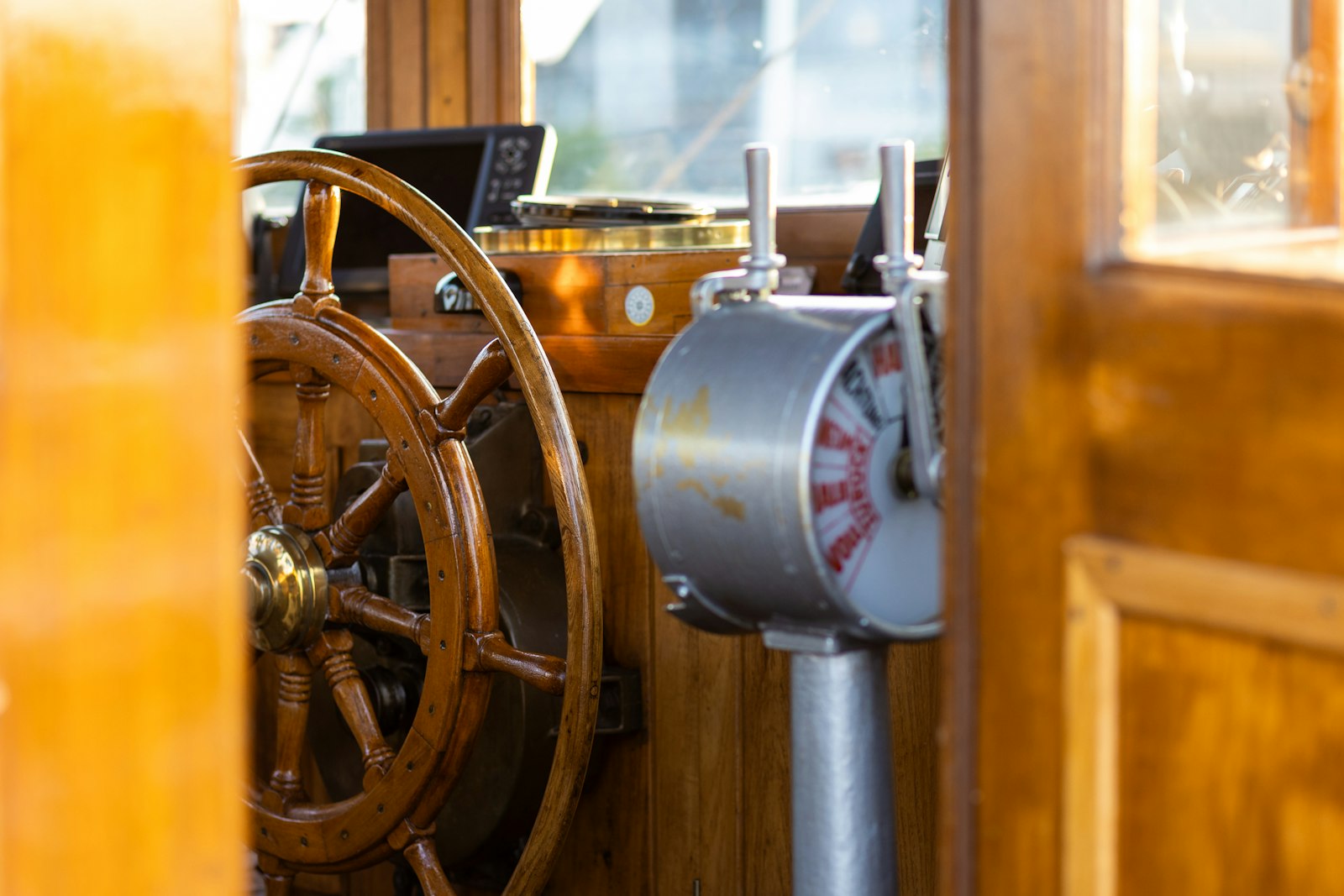
A sheltered steering position. This is the giveaway. Most motorsailers have a pilothouse, or at minimum an enclosed cockpit — the old nickname is a “doghouse” — where the person steering is out of the weather. A sailing yacht leaves the helm open to the sky.
Two masts, often. Ketch, yawl and schooner layouts are common, which splits the sail area into smaller pieces that two people can handle without winches doing the work.
Less sail than you would expect. For the same length, a motorsailer carries noticeably less canvas than a pure sailing boat. That is deliberate: smaller sails, easier handling, and the engine covering the performance gap.
A fuller hull. Beamier and steadier than a performance hull, with more volume inside and frequently a shallower draft.
Heavier build and more interior. Sturdier than a racing-derived boat, with living space that feels a size larger than the length suggests.
What the type is actually good at
Weather that does not cooperate. This is the central case. A sailing boat with a headwind and no patience has a bad day. A motorsailer puts the engine on, keeps a steadying sail up, and arrives. It is also far better at running for shelter when a front is coming, which matters more in shoulder season than in July.
Shoulder-season and autumn weeks. An enclosed steering position changes a wet morning from an endurance exercise into a non-event. This is the strongest argument for the type and the reason it deserves attention in October and November chartering, when the chance of one grey day is real.
Small or mixed crews. Reduced sail area and divided rigs mean two people can run a large boat. Families with children who want a boat that sails but is not demanding fall naturally into this category.
Shallow water. The typically shallower draft opens anchorages that a deep-keeled yacht has to pass by, and makes inland and estuary cruising practical.
Comfort over speed. The type was designed for long passages in reasonable comfort, not for pointing high and going fast. If you have ever come off a charter irritated by how much of the week was spent heeled over, this is the answer to that complaint.
What you give up
Honestly: sailing performance. A motorsailer will not point as high, will not accelerate the way a lighter boat does, and will not give you the sensation that makes people love sailing in the first place. In light airs it needs the engine where a proper sailing boat would still be moving.
Fuel sits above a sailing boat’s, because you use the engine as a matter of course rather than as a last resort — though far below a motor boat, which is precisely the point. How fuel is charged matters more here than on a pure sailing charter.
And availability is the real limitation. The charter fleet is thin: Croatia, Greece and Turkey each list them, but the choice of dates and sizes is a fraction of what the mainstream types offer. If you want one, book early.
Where the type came from
Motorsailers appeared in the early twentieth century, and they were a fix rather than a fashion. The sailing boats of the period were small, cramped below, and fitted with weak auxiliary engines that could barely push them against a tide. Putting a serious engine in a roomier hull solved several problems at once, and for decades the result was simply what a cruising boat looked like.
The type fell out of favour when production sailing yachts got lighter, faster and far better at sailing, and when marina berths made manoeuvring under power routine for everyone. What survived is a smaller, deliberate category: boats chosen because somebody wanted shelter and self-sufficiency rather than performance. In American usage you will see it spelled “motorsailor”, which is the same thing.
It is worth knowing this history, because it explains why the charter examples skew older and why they are often found alongside classic wooden boats in the same fleets. Chartering something traditional covers that overlap.
What to check before booking one
Because the category is loose, two boats sold as motorsailers can be very different. Five questions settle it.
Is the steering position genuinely enclosed? A pilothouse with a door is one thing; a cockpit with a canvas cover is another. Ask for photographs of the helm, not the saloon.
Can you see out of it? Some pilothouses have poor sightlines, which matters when you are coming alongside.
What is the engine, and what does it burn? The whole premise is a capable engine. A motorsailer with an undersized one is a slow sailing boat.
What is the draft? One of the type’s advantages is shallow water. Not all of them have it.
What sail handling does it have? Furling headsail and in-mast or in-boom furling for the main turn a divided rig into something two people manage easily. Hanked sails on a ketch are a different week.
These belong on the same list as the rest of the pre-booking checks — the deposit, the fuel terms, the inventory — set out in the contract lines worth reading twice and the check-in checklist. If the boat comes with a skipper, most of the handling questions become theirs rather than yours: the three formats and what needs a licence cover that.
Where it sits against everything else
Against a sailing boat: more comfort, more shelter, more interior, less sailing.
Against a catamaran: similar stability for less money, and far fewer of them. A catamaran gives more deck and more cabin privacy; a motorsailer gives a dry helm and a lower rate. For a crew who are choosing stability because somebody dislikes heeling, both work — see the three-way comparison.
Against a motoryacht: a fraction of the fuel and the option to turn the engine off, in exchange for less speed and less space.
Against a gulet: the comparison is closer than it looks, because many gulets are technically motorsailers — large, wooden, two-masted, and motoring most of the time. The difference is that a gulet comes with a crew and a group of twelve, which is a different product entirely. What a gulet charter is explains that, and the large-group comparison covers who it suits.
Against a cruiser: the nearest neighbour. A cruiser is a sailing boat optimised for living aboard; a motorsailer goes one step further and optimises for weather too.
Should you book one
Yes, if the week is in May, early June, late September or October; if the crew includes someone who will not enjoy being heeled or wet; if you want to sail but not be governed by the wind; or if you have found one and it is cheaper than the catamaran you were considering, which it usually is.
No, if sailing well is the reason for the trip, if the week is in settled high summer where a pure sailing boat has no downside, or if you need the deck space and cabin separation that only a multihull provides.
The type is a specific tool rather than a compromise, which is the thing its reputation gets wrong. If you are still narrowing the field, the route through all eleven options puts it in context, and Croatia, Greece and Turkey are where to look for one.