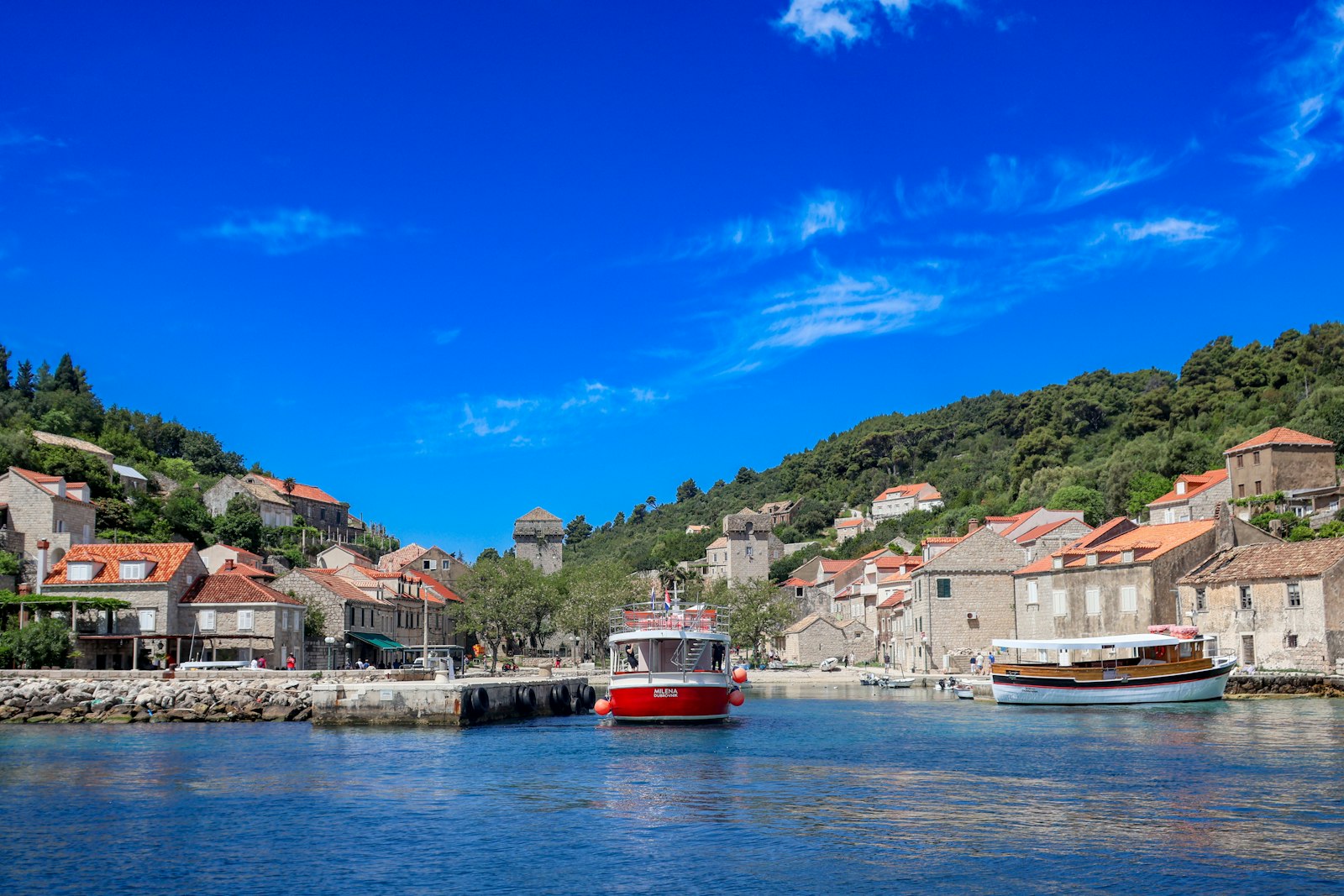
Zadar is the base people choose on the second trip. The first time they go to Split because it is the name they know; then they look at a chart, count the islands north of it, and come back here.
The number is the argument. Roughly three hundred islands and islets sit off this stretch of northern Dalmatia, the Kornati archipelago is about fourteen miles from the city, and the water between is sheltered by two long island chains. Nowhere else on the Croatian coast puts that much choice that close to a base.
Which base you are actually leaving from
“Zadar” covers several marinas spread over fifteen miles, and the difference matters on the first and last day.
Marina Zadar and D-Marin Borik sit at the city. Borik is a few kilometres north of the old town, modernised, with space for a couple of hundred boats and depths to around three and a half metres. Marina Zadar is closer in. Both put you walking distance or a short taxi from a genuinely good town, which is not true of every charter base.
The larger fleets are at D-Marin Dalmacija in Sukošan, seven miles south in the sheltered bay of Zlatna Luka. It is one of the biggest marina complexes in the country, with well over a thousand wet berths, and its breakwaters hold boats securely even when the bora blows hard from the northeast. If your confirmation says Sukošan, you are here — twenty minutes by road from Zadar, with no old town at the end of the pontoon. Sukošan itself is a working marina village rather than a destination.
Diklo is the small, quiet alternative on the city’s northern edge.
Getting here: Zadar has its own airport with direct European connections, which is the real convenience. Split airport is about 120 kilometres away — a drive of an hour and a half, worth knowing if your flights point there.
The sailing area, which is the point
Two parallel island chains run along the coast here, and the channel between them and the mainland is the calmest cruising water in Croatia. You can sail the whole week inside it and never take open sea if the forecast is poor, which is unusual and valuable.
The inner chain is Ugljan and Pašman, almost continuous, close in, with villages every few miles. Easy, pretty, sheltered, and the right first night if you boarded late.
Outside them sits Dugi Otok — long, thin, with Telašćica on its southern end, a deep natural bay that is one of the best anchorages on the coast and a national park in its own right. From Telašćica it is a short hop into the Kornati, which is the reason most people come. Bare stone, almost no buildings, and a landscape that looks like nowhere else in the Adriatic. Park fees apply, and they apply to being in the water rather than to mooring — see the local charges.
North, Pag, Silba and Olib open up quieter water again, with Pag’s lunar western side and the stone-walled sheep country behind it.
A week that works without rushing: out through the Zadar channel to Ugljan, down to Veli Iž, into Telašćica, two days in the Kornati, back up through Pašman and Biograd, and home. That is about a hundred and twenty miles with the longest day under five hours — the kind of week that leaves time to swim, which most Croatian itineraries do not when planned on a map.
Wind, and the two names to know
The maestral is the working wind: a thermal northwesterly that builds through the morning, peaks in the early afternoon at a useful force four, and drops towards evening. It is reliable from June to September and it is why this coast sails well rather than just looks pretty. Plan to be moving at midday and stopped by six.
The bora is the one to respect: a cold, violent northeasterly that falls off the mountains behind Zadar with little warning and can blow hard for a day or more. It is mostly a winter and shoulder-season phenomenon, it is forecast reasonably well, and the answer is always the same — be somewhere sheltered before it arrives. This is one reason the big Sukošan breakwaters matter, and one reason an inexperienced crew here is better off with somebody aboard who reads the sky. What a skipper is for covers that honestly.
June through September is the settled, dry stretch. May and October both work with more variability, and the autumn case is in sailing in October and November.
Which boat suits this water
The sheltered channels and the shallow Kornati bays reward specific choices.
A sailing yacht from Zadar is the natural fit, because the maestral is a sailing wind rather than a nuisance and the distances are short enough that a slow boat loses nothing. The fleet depth here is good and the prices sit below Split’s, which is the quiet financial argument for the base — see what a Croatian week costs.
A catamaran from Zadar comes into its own in the Kornati, where the draft lets you anchor in bays a keelboat has to pass by. Against that sits the berth surcharge covered in mooring fees — though in this archipelago you want to be at anchor anyway, which makes the surcharge largely theoretical. For families this is usually the right answer, and the multihull case explains why.
A motor boat turns the whole region into day trips from one base, which suits crews who would rather sleep in the same place twice. The fuel consequence is in the fuel policy, and it is larger here than people expect because the interesting places are spread out.
If none of it is settled yet, the route through the types is the place to start, and the Croatian fleet as a whole shows what is free for your dates.
Zadar the town, which is better than its reputation
This matters because you will spend an evening here at each end of the week.
It is a Roman street grid inside Venetian walls, with a Romanesque cathedral, a forum with the columns still standing, and two pieces of modern public art on the waterfront — the sea organ and the sun salutation — that are genuinely worth the walk at sunset rather than being the usual guidebook filler. It is a real city with students in it, not a resort, which means the restaurants are priced for residents.
Inland, Krka, Paklenica and the Plitvice lakes are all within driving distance, which makes an extra day at either end easy to justify.
Zadar or somewhere else
Choose Zadar if the islands are the point, if you want the Kornati without a long delivery leg, if you value sheltered water with an open-sea option rather than the reverse, and if there is a flight into its airport.
Choose Trogir or Split instead if your flights land there, or if you want Hvar, Brač and Vis — a livelier, more built-up island group with better nightlife and more boats. The islands near Split and the Hvar run cover that side.
Choose Biograd if you want the same Kornati access from a smaller, cheaper base, or Šibenik for the Krka river and a different set of channels.
And look south to Dubrovnik only if the city is the reason for the trip, because the sailing area there is thinner. Across the whole Adriatic, this stretch of coast is the one that rewards a chart and a week.