A houseboat holiday is the least nautical thing in this category and, for a specific set of people, the best answer on the list. No sea, no swell, no sails, no qualification, and a speed limit that makes a bicycle look urgent.
It is also the only boating holiday you can take with a crew who have never been on a boat and no interest in learning.
What it actually is
A houseboat is a flat-bottomed, shallow-draft vessel built for rivers and canals rather than open water. Cabins, a galley, a bathroom or two, a steering position, and a large flat roof or deck for sitting on. There is no rig and the engine is deliberately small.
You move a few hours a day between villages, you tie up to a bank or a quay, and you walk or cycle from there. The boat is accommodation and transport, and the journey rather than the destination is the entire product.
The main European grounds are the French canal network — the Canal du Midi, Burgundy, the Mayenne, Alsace — plus the Netherlands, parts of Germany, Ireland and the Norfolk Broads. The French system is the largest and the one most people mean. French houseboats and Italian ones are the two in the Mediterranean fleet.
The licence question, which is the main attraction
In France you can hire a houseboat with no boating qualification at all, and that is a legal provision rather than an operator’s indulgence.
The rule covers rented pleasure craft up to around fifteen metres with limited engine power — one operator states the threshold as an output up to 4.5kW or about 6 horsepower — and the rules are the same across the French inland network. Anything outside those limits requires an inland waterways licence.
The speed cap is what makes it safe, and the sources differ on the number: fifteen kilometres an hour in one account, ten in another, and six to eight on throttled rental engines in a third. Treat it as “slow” and confirm the figure for your route, because it varies by waterway.
What you get instead of a licence is an induction. A couple of hours at the base covering the controls, handling, locks, mooring, safety and what to expect on your particular route, ending with you demonstrating that you can do it. Where a specific waterway needs a temporary permit, that induction is what qualifies you and the base issues the paperwork.
Outside France the arrangements differ: in the UK the rental company holds the waterway licence on your behalf, and some other countries do require a qualification. Ask per country rather than assuming. The sea-going equivalent of all this is in what a licence is actually required for.
Locks, which are the work
This is the part people do not anticipate, and it is also the part they remember.
A canal route means locks — sometimes dozens in a week — and each one is a manoeuvre: approach slowly, hold the boat against the wall with lines while the water level changes, then move on. Many French locks are automatic or attended; plenty are not.
The practical consequence is a division of labour. Two people working — one steering, one handling lines ashore — is enough, and the rest of the group can sit on the roof and watch. That is genuinely how it works, and it means a group of six needs only two people who want a job.
The etiquette is simple and worth knowing: when meeting another boat you keep right and follow the bank.
Who this is the right answer for
Families with small children. No heeling, no swell, nothing to fall off into except water you are moored beside, and a flat deck the whole time. For a crew with a toddler it is calmer than any sea-going option — the comparison is in sailing with a baby or toddler.
Multi-generational groups. Grandparents who would find a sailing boat difficult to board and move around can use a houseboat without difficulty.
Anyone who gets seasick. There is no motion. This is the one boating holiday that is genuinely immune, which makes it the honest answer when the motion problem has ruled out everything else.
People who want the food and the villages. A canal route through Burgundy or the Midi is a tour of markets, vineyards and restaurants with your accommodation following you. That is the actual appeal and it has little to do with boats.
Crews with nobody qualified and no interest in becoming qualified. The alternative at sea is taking a skipper, which costs money and puts a stranger aboard. Here you need neither.
Who should look elsewhere
Anyone who wants to swim in clear water, anchor in a bay, or sail. There is none of that: the water is fresh, usually brown, and not for swimming, and the boat does not sail because it has no rig.
Anyone who wants to cover distance. At eight kilometres an hour through locks, a week is a short stretch of one canal.
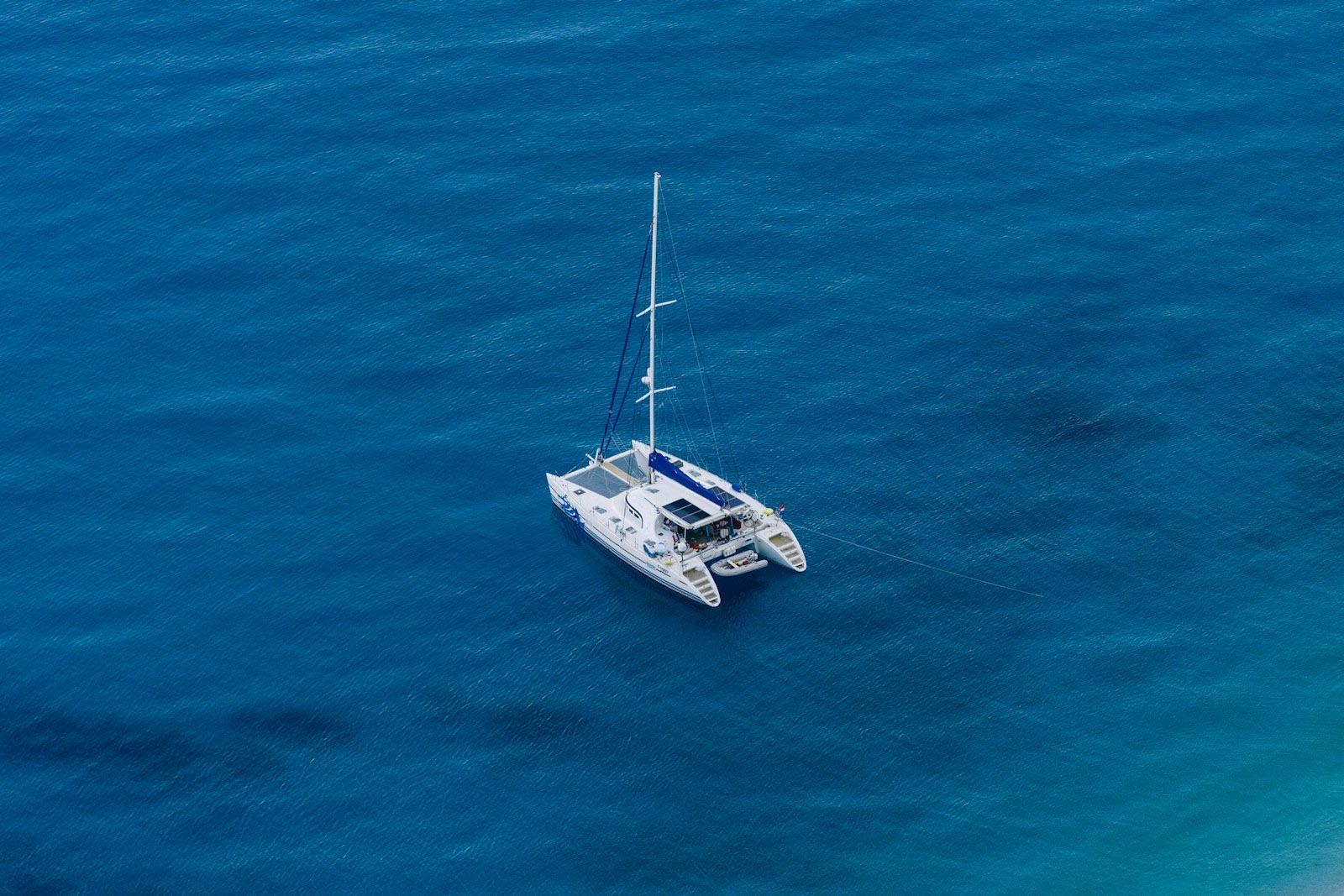
And anyone whose mental image is the Mediterranean. If the picture in your head is a white hull on blue water, a houseboat will disappoint regardless of how good the holiday is — look at motor boats or a catamaran instead, and read the route through all eleven types.
Costs, and how they differ
The structure is simpler than a sea charter and the surprises are smaller.
Fuel is normally billed by engine hours rather than full-to-full, because there are no sails and consumption is predictable — in the region of €7 to €13 per engine hour depending on boat size. That model is explained alongside the others in how fuel is charged.
There are no marina fees in the sea-charter sense: you moor to a bank or a village quay, usually free or for a nominal charge, which removes the largest variable cost of a Mediterranean week — compare what a berth costs in Croatia. There is no tourist tax regime of the kind described in the Croatian charges, and deposits are modest.
Against that, the weekly rate per berth is not notably cheaper than a mid-size monohull, and the season runs April to October with the same peak pricing logic as everywhere — see how season bands work.
Spring and autumn are better here than high summer, because the canals are shaded, the towpaths are for cycling, and nobody needs the water to be warm. That inverts the usual advice in autumn chartering, where the sea temperature is the constraint.
Before you book
Check the number of locks on your intended route, because that is the real measure of how much work the week is. Check the air draft against the bridges if the route has low ones. Check how many bicycles come with the boat, since that is how you see anything. And check whether the quoted route is achievable in your days at the actual speed limit rather than on a map.
If the group includes someone who wants the sea after all, the honest compromise is a short day charter at the coast on a separate trip rather than trying to make one boat do both. The sea-going fleets are at France, Croatia and across the Mediterranean.