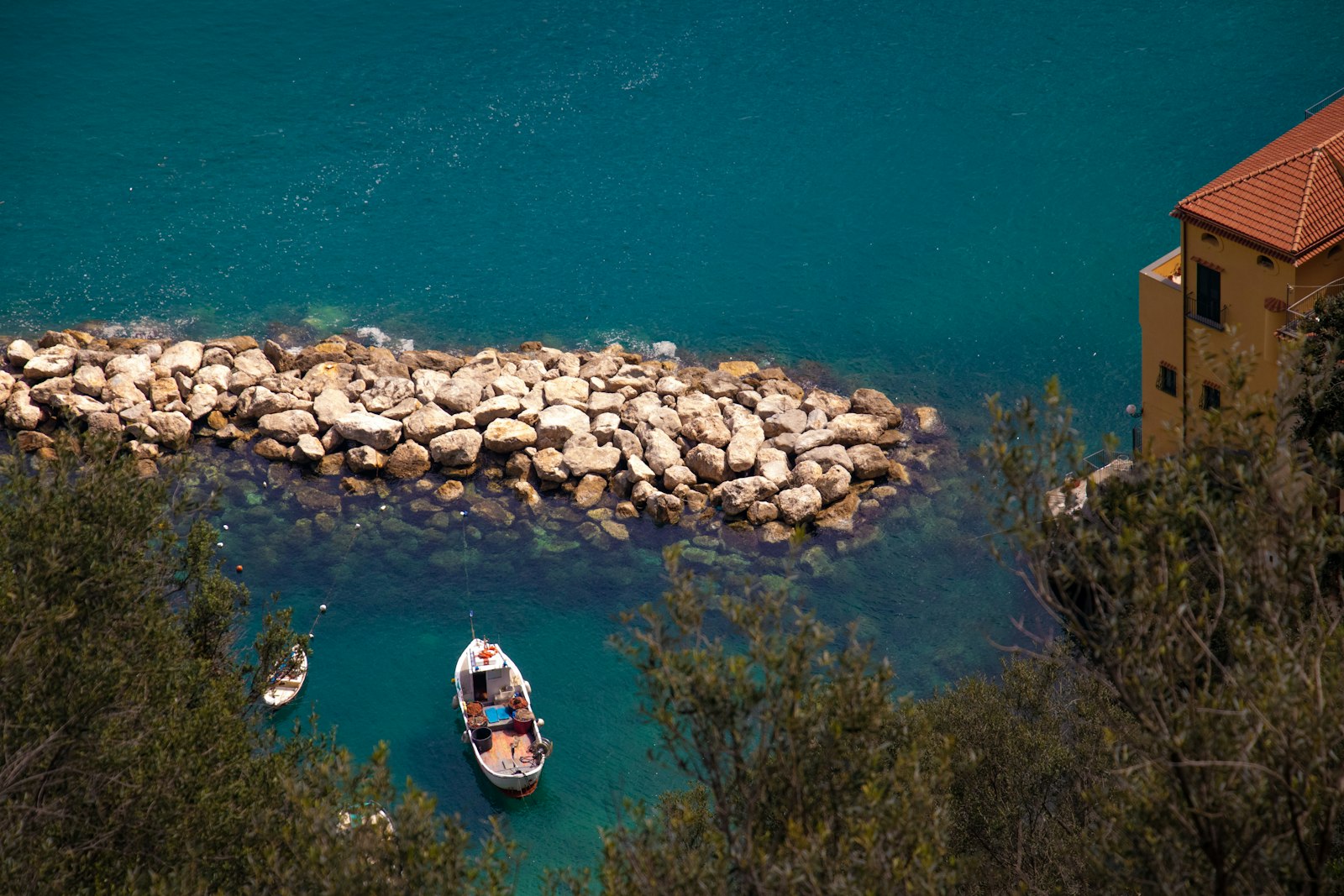
A RIB is the cheapest way to get onto the water for a day, and the most honest about what it is. A rigid hull with inflatable tubes, an outboard that makes it quick, no shade, no cabin, and nothing between you and the weather.
For three bays and a swim it is excellent. For anything else it is the wrong boat, and people who book one expecting a small yacht come back wet and disappointed.
What you get
Speed, mostly. A RIB does twenty-five knots where a sailing boat does six, which means a stretch of coast that would take a sailing yacht a day is a morning. For a family staying ashore who want to reach a particular island, a cave or a beach that the road does not serve, that is exactly the right tool.
It also means freedom from a schedule. You go where you decide at breakfast, you stop where you like, and nobody has to know anything about sails.
Capacity is typically six to twelve depending on size, and the whole boat is one open space — which makes it sociable in a way a cabin boat is not.
What it costs
Day rates in the popular Mediterranean destinations start around €120 for a small boat and rise steeply with engine power; a week, where offered, starts around €600. Most people take half a day or a full day, which is what the type is for.
The number that surprises people is fuel. It is almost always extra on a self-drive rental, and the range is enormous — anywhere from €25 to over €1,000 a day depending on engine power, how fast you go and how far. A large RIB driven hard all day will burn more than the rental cost.
The lever is throttle. At half speed consumption falls disproportionately, because planing hulls are inefficient at the top of their range. Crews who treat it as a fast boat used slowly spend a fraction of what crews who hold it wide open do — the general mechanics are in how fuel is charged.
Expect a security deposit, commonly in the region of €500 on a self-drive booking, plus the usual card pre-authorisation. How deposits work applies in miniature.
Licence: it depends where you are
The rules vary by country and by engine size, and this is the thing to settle before booking rather than at the quay.
In France a licence is required once engine power exceeds about 6 horsepower, which covers essentially every RIB worth renting. In the UK a licence is generally needed only on inland waters — rivers and canals — and not for an estuary, tidal water or the open sea. In Greece, driving it yourself requires a skipper’s licence.
Marketplaces advertise licence-free RIB hire, and that is true in some places for small engines and not in others. Treat the claim as something to verify for your specific destination rather than a general rule, and read what a licence is actually required for alongside it.
Where you do not hold one, hiring with a skipper is the standard route and frequently the better one anyway — somebody who knows which caves are accessible and where the current runs.
Self-drive bookings commonly involve more than showing a card: a deposit, sight of the original licence, and sometimes a short competency test before the agreement is signed. Minimum age is usually eighteen.
Sizes, and what each one is for
RIBs span a wide range and the differences are larger than the name suggests.
Around 4 to 5 metres with a modest outboard: the licence-free end in countries where that exists, four to six people, slow enough to be cheap on fuel. Right for crossing a bay to a beach and little more.
5.5 to 7 metres: the standard day-rental size. Six to ten people, a console with a windscreen, often a small sun canopy and a token bow cushion. This is the boat that covers a proper stretch of coast in a day, and the one most listings mean.
8 metres and up: twin engines, a small cabin or heads in some, capacity to twelve, and a ride that holds together in a chop. These shade into the motor boat category and are priced accordingly, but for a group of ten they are the comfortable version of a RIB day.
The decision is rarely about capacity on paper. A boat rated for ten carries ten only in flat water; in any chop the same boat is unpleasant with eight. The realistic headcount applies here more sharply than on a larger boat.
Driving one, if you are allowed to
A RIB is easy to drive and easy to drive badly, and two habits make the difference.
Trim and speed together. A planing hull wants a specific speed to sit level. Too slow and it ploughs with the bow up and the view gone; too fast in a chop and it leaves the water and lands hard. The comfortable speed in any given sea is usually well below the top one, and finding it is most of the skill.
Approach everything slowly. Tubes are forgiving against a quay and the outboard’s propeller is not forgiving of a swimmer. In a crowded Croatian or Greek bay in August the water is full of people, and a RIB is the boat most likely to arrive among them too quickly.
Anchoring is simple — these boats draw almost nothing and can nose right up to a beach — which is the genuine freedom of the type. Just note the wind: a light boat with large tubes blows downwind fast once the anchor is up.
The weather problem, which is the main limitation
A RIB is small and sits in the water rather than above it, so it is affected by wind and waves far more than a larger motor boat or a motoryacht. A chop that a forty-footer barely notices makes a RIB a wet, pounding ride.
That has three consequences. Mornings are better than afternoons almost everywhere in the Mediterranean, because the thermal wind builds through the day. A day with any real forecast is a day to postpone rather than endure. And the operators who advise against bringing children under about eight are being sensible rather than cautious — the ride is physical.
There is also no shade unless a canopy is fitted and no shelter at all from spray. For an August day in Croatia or Greece, that is a genuine consideration for anyone fair-skinned or elderly.
What to bring
Operators generally expect you to bring your own towels and sun protection, and a hat is close to essential in summer.
Add a dry bag for phones and keys, because everything in an open boat gets wet. Reef shoes, because the bays you can reach have rocky entries. And more water than you think, since there is no fridge.
Snorkelling gear, paddleboards, wakeboards and similar are usually available as paid extras — worth arranging when booking if swimming is the point, and covered in diving and snorkelling from a yacht.
Check-in and check-out times are fixed, commonly nine in the morning to six in the evening, and the day is shorter than it sounds once you account for the briefing.
Where a RIB beats the alternatives
Staying at a resort and wanting one good day on the water, without managing a boat for a week. The Balearics and the French Riviera are built around this, and Split and Dubrovnik both have substantial day fleets.
Reaching something specific and close — a cave, an islet, a beach with no road. This is the type’s clearest advantage over anything slower.
A short, active, competitive group day, including corporate events where several boats racing each other is the activity rather than the venue — see corporate charters.
And testing whether somebody enjoys being on the water at all, cheaply, before committing to a week — which is the broader argument in a day against a week.
When to book something else
If anybody aboard needs shade, a bathroom or a flat ride, take a motor boat with a small cabin instead for not much more money. If the group includes small children, the same. If the day involves more than about three hours of actual travelling, a bigger boat is more comfortable and barely slower in practice once stops are counted.
And if you want to sleep aboard, this is not the category at all — sailing boats, catamarans and motoryachts are, and the route through all eleven types sorts that out. The Croatian RIB fleet and the Greek one are where to look for the day version, and the wider fleets at Croatia, Greece and across the Mediterranean.