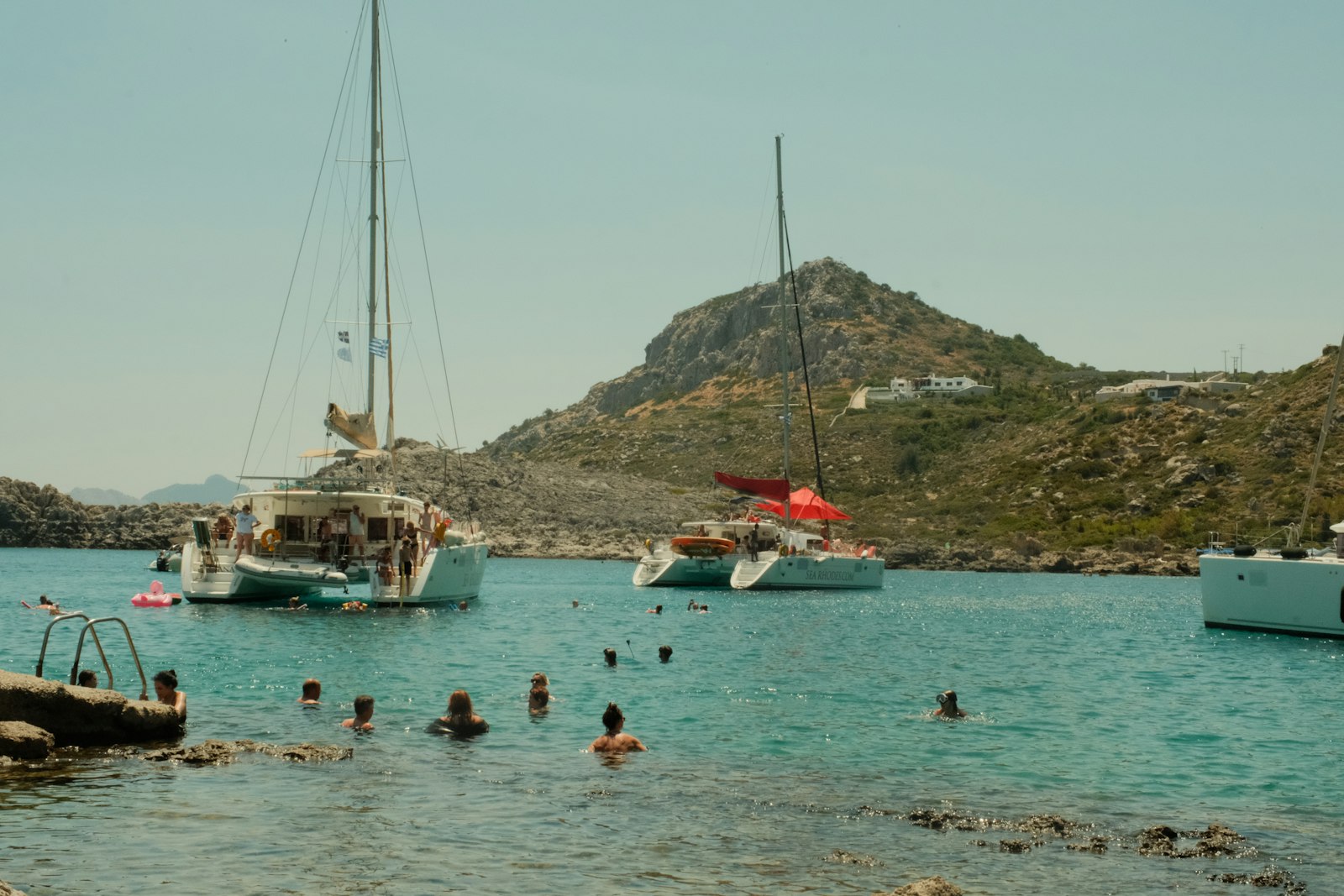
Snorkelling from a charter boat is easy and usually included. Scuba diving is neither, and the gap between the two surprises people — in both Croatia and Greece, putting a tank on requires permits, and in Greece it has historically required a good deal more than that.
Here is what each actually involves.
Snorkelling: the easy case
Most charter boats carry masks and snorkels as standard, and operators commonly list snorkelling equipment among the included water toys. Quality varies from excellent to a cracked mask that leaks, so bring your own if you care — it packs small and it is the difference between an afternoon in the water and an afternoon giving up.
The Adriatic and the Aegean are both unusually good for it: visibility is high, the water is clear, and the rocky coastlines mean fish rather than empty sand. The best snorkelling is almost always at the edges of a bay rather than in the middle, and over rock rather than over seagrass.
Two safety points worth stating. Nobody snorkels alone off a boat at anchor, because the current in a channel is stronger than it looks from the deck. And a dive flag or buoy makes you visible to tenders, which is the actual hazard in a busy anchorage in August.
For a crew wanting a day of this rather than a passage, the shallow clear bays reachable from a catamaran with its shallow draft are the ones to aim for — see the anchorage guide.
Scuba in Croatia: a permit and some closed areas
Scuba diving in Croatia requires a diving permit issued by the Croatian Diving Federation to divers holding valid certification, generally valid for a year. This is not an operator’s rule but a national one.
Several areas need separate permission on top of that. The Kornati, Mljet and Telašćica all require a permit issued by the park authority, and in some zones diving is permitted only under the supervision of a licensed diving centre. Krka also requires its own permit for underwater exploration.
Your charter company or skipper will frequently handle the paperwork, and that is the route to take — ask when booking rather than on the day, because a permit arranged in advance is routine and one arranged mid-charter is a lost morning.
Spearfishing is prohibited. The park authorities publish zone maps with permitted anchoring and diving areas, which are worth looking at before planning a route through a park, alongside the fees described in the local charges.
Scuba in Greece: historically difficult, now looser
Greece restricted recreational diving heavily for decades to protect underwater archaeology, and older guidance states flatly that charter guests could not use scuba gear almost anywhere.
That has been relaxed. Current descriptions — mostly from operators, so treat them accordingly — say amateur diving is now permitted across much of the country with specific exceptions. The exceptions are the point: archaeological sites remain protected, several areas are closed, and photographing or filming in a prohibited area requires written permission from the competent authority.
Practical rules that do apply: a diving flag must be displayed on the accompanying boat, and a diving buoy is required if you go more than fifty metres from it.
Most Greek charter operators simply do not carry scuba equipment, and their advice is consistent — hire gear, a boat and a guide from an organised dive centre in an area where diving is permitted. Larger crewed yachts sometimes carry tanks and a compressor, but only with licensed instructors aboard.
The realistic approach
For scuba, book through a local dive centre and treat it as a day excursion from wherever you are moored rather than something you do off the back of the charter boat.
This is better than it sounds. A centre has the compressor, the permits, the local knowledge of which sites are open, and the liability cover. You arrive by tender or taxi, dive two sites, and are back aboard by late afternoon. Split, Dubrovnik, Kos and Rhodes all have established centres.
Arrange it before the charter if the dive is the reason for the trip. If it is an option you might take, note the centres along your route and call from the boat two days ahead.
And bring your certification card and logbook. Nobody will take your word for it.
What to bring
Short list, and all of it packs small.
Your own mask. A mask that fits your face is the single thing that determines whether snorkelling is pleasant. The boat’s spares are a lottery. A snorkel and fins are nice to have and bulkier; the mask is the one to pack.
Reef shoes. Entering the water off rock, and getting back out of it, is where people cut their feet. Sea urchins are common throughout the Adriatic and Aegean.
A dry bag. For getting a phone, a towel and car keys ashore in a tender without soaking them.
Certification and logbook, if you intend to dive at all.
A rash vest rather than relying on sunscreen, because an hour face-down in clear water burns a back thoroughly. What to bring covers the general list, and the sun question matters even more with children aboard — see sailing with a baby or toddler.
Where the water is best
Worth factoring into the route, because the difference between an average bay and a good one is substantial.
In Croatia the clearest water is around the outer islands — Vis, and the seaward side of the Kornati — where there is less river influence and less traffic. The Šibenik archipelago’s smaller islets are good and underused. Inshore bays near large towns are noticeably murkier.
In Greece the Ionian is clear and green-tinted, with Antipaxos near Corfu the standout. The Aegean is clearer still and colder, and the Dodecanese have good wall diving where it is permitted.
In both countries the rule is the same: rock rather than sand, edges rather than middles, and morning rather than afternoon, before the wind puts a chop on the surface and the tenders arrive.
On a crewed boat
The larger crewed yachts are where diving from the boat becomes realistic: tanks, a compressor, and sometimes an instructor among the crew.
Say at booking that diving matters, because it changes which boats are suitable and it is not a standard inventory item. On a fully crewed charter the costs — equipment hire, instructor time, permits — come out of the advance allowance rather than being quoted separately, which is set out in the APA explained. Say it early enough and the route itself can be built around dive sites.
The same early conversation covers anything else that needs arranging rather than improvising — fishing, which has its own licensing, and dietary requirements.
Which boat helps
For a water-focused week, the type matters more than usual.
A catamaran is the best platform: a wide swim platform between the hulls, shallow draft so you can anchor close to the rock where the fish are, steps rather than a ladder, and deck space to dry things. Croatian catamarans and Greek ones are the obvious search.
A motoryacht gives you range to reach specific sites and usually a decent tender, which is how you actually get to a reef from a mooring.
A RIB for a day is the cheapest way to reach a snorkelling spot from a resort, with no boat to manage — what a RIB day involves covers it.
A deep-keeled monohull is the least convenient, because the good snorkelling is in shallow water you cannot anchor in and the transom ladder is a poor way back aboard with fins on. Workable, and not ideal. If the type is open, the route through the options comes first, and the fleets are at Croatia, Greece and across the Mediterranean.