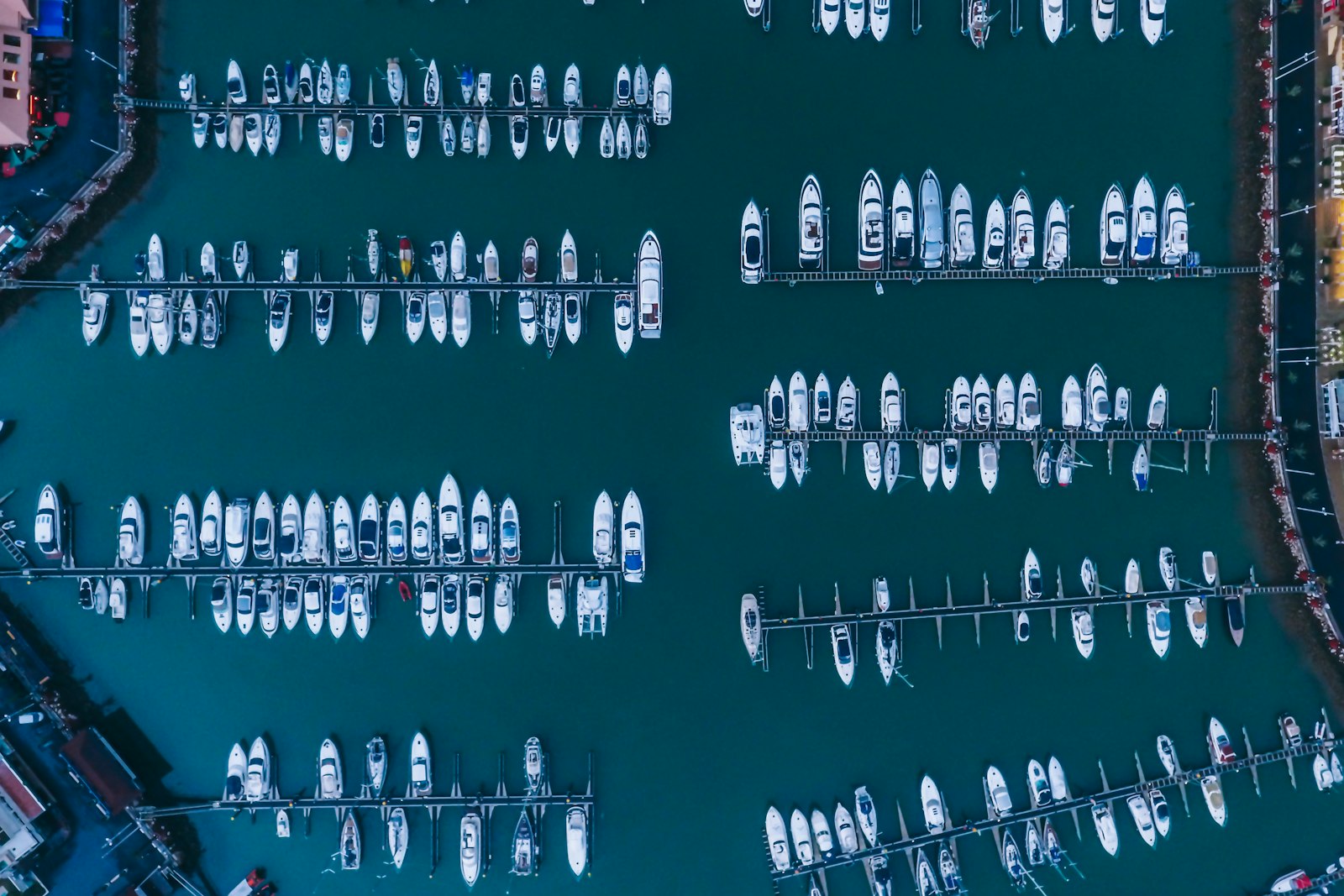
“Athens” on a charter booking means one of four marinas spread across forty miles of coast, and the choice is not administrative. It decides which islands you can reach, how hard the sailing is, and whether your transfer is twenty minutes or an hour in traffic.
Pick the marina to match the route, not the other way round.
Alimos: the default, and usually the right one
Alimos, also called Kalamaki, is where most Athens charters start. It holds somewhere around eleven hundred berths, including roughly fifty sized for boats over twenty-five metres, which means the motor yacht and gulet fleets sit alongside the sailing boats.
Its advantages are access and depth of fleet. The airport is about twenty minutes by taxi, there is a tram into Syntagma Square, and the sheer number of boats means your dates and your boat type are more likely to exist here than anywhere else in Greece.
Its disadvantages are the consequences of that scale. It is loud and full, particularly at weekends. Berths are tight and manoeuvring a large boat demands precision. Guests report water and power at the pier being unreliable at times. None of this is serious; all of it is worth expecting rather than discovering.
Route fit: the Saronic Gulf is on the doorstep — Aegina, Agistri, Poros, Hydra, Spetses — which is the gentlest sailing in the region and the right answer for a first charter or a nervous crew. The Saronic in detail covers that week.
Lavrion: for the Cyclades, if the crew can take it
Lavrion is the second-largest base near the airport, with several hundred charter boats between the main marina, the Olympic Marina and the main port. It sits about sixty kilometres southeast of the city, on the far side of Attica.
The reason to start here is geography. Lavrion is already most of the way to the Cyclades: Kea is two hours, Kythnos four, Syros and Mykonos within a comfortable day. From Alimos the same islands require a long passage out of the Saronic first, which eats a day at each end of the week.
The reason to think twice is the wind. The meltemi blows from June to September and in the channels between the Cyclades it can reach thirty knots. This is genuine sailing, not a gentle holiday, and the islands’ harbours are exposed in a way the Saronic’s are not. How the meltemi behaves is required reading before booking a Cyclades week, and a crew without real experience should take somebody who has done it.
The transfer is the other cost: forty-five minutes on a good day, considerably more in heavy traffic. The town itself is calm and unselfconsciously Greek, which some crews prefer to the Athens suburbs.
Zea: the city option
Zea Marina, in Piraeus, has over six hundred and seventy berths and sits in the middle of a real town — restaurants, cafés, shops, and the whole apparatus of a port city rather than a marina village. The basin and nearby Mikrolimano are among the more pleasant places to spend an evening before boarding.
It is noticeably more hospitable than Alimos for a crew arriving the day before, and it is well placed for both the Saronic and a Cyclades route. The charter fleet is smaller, and it skews towards larger and better-appointed boats.
Choose it if you want a night ashore that feels like a city, or if the boat you want happens to be here.
Kallithea: the quiet fourth
Marina Delta Kallithea is the newest of the four and the least discussed. It sits between Alimos and Piraeus, it is modern, and it is far quieter than Alimos on a Saturday afternoon.
Fleet depth is the limitation. If your boat is here, it is a comfortable place to start. It is not somewhere to search first.
What changes between them, in practice
The first day. From Alimos or Zea you are in the Saronic within two hours and can anchor for the first night. From Lavrion the first leg is a crossing, which is the wrong thing to do on an evening when nobody knows the boat yet.
The islands. Saronic from the city marinas; Cyclades from Lavrion. Doing the other one is possible and spends two days of the week on delivery.
The difficulty. Saronic is sheltered and forgiving. Cyclades is open water with strong wind and exposed harbours. These are different holidays and the marina is where you commit to one.
The transfer. Twenty minutes versus three quarters of an hour or worse, with luggage, after a flight.
Greek check-in, wherever you start
One thing is the same at all four, and it surprises people. Charter contracts cannot be confirmed in advance at the port office: Greek law requires the client’s original signature and the crew list to be completed on site, which means a port police visit on the day and, at a base turning over hundreds of boats on the same afternoon, a wait.
Bring passports for everyone aboard, arrive early rather than late, and do not book dinner for seven on the first evening. The charges and documents covers how the Greek system differs from Croatia’s — lighter administration, lower fees, and a cruising tax charged by vessel length rather than a transit log.
Which boat, and what the fleet looks like
A sailing yacht from Athens is the deepest part of the fleet by a wide margin, and 40 to 45 feet is the sweet spot for both cruising grounds. The Greek economics are favourable: lower rates than Croatia and roughly half the berthing, as set out in what a Greek week costs and mooring fees.
A catamaran from Athens is the family and large-group answer, and the supply here is better than at the smaller Greek bases — see multihulls and what one costs. In meltemi conditions the level deck is worth a great deal.
A motor yacht or motor boat from Athens suits crews who want the Saronic islands without the sailing, and Alimos’s large berths are where those boats are. There are even gulets at Athens for groups of a dozen — the comparison against a catamaran is the decision there.
If the type is unsettled, the route through the options comes first.
The short version
Saronic Gulf, mixed-ability crew, or a first charter: Alimos, or Zea if you want a better evening before boarding.
Cyclades, experienced crew, prepared for wind: Lavrion.
And if the boat you actually want is at the other marina, take the boat. The transfer is an hour of the week; the boat is the rest of it. Across the Greek islands, Athens is the base with the most choice, which also means the most ways to pick wrong — the other half of the country is covered in Lefkada and Corfu.