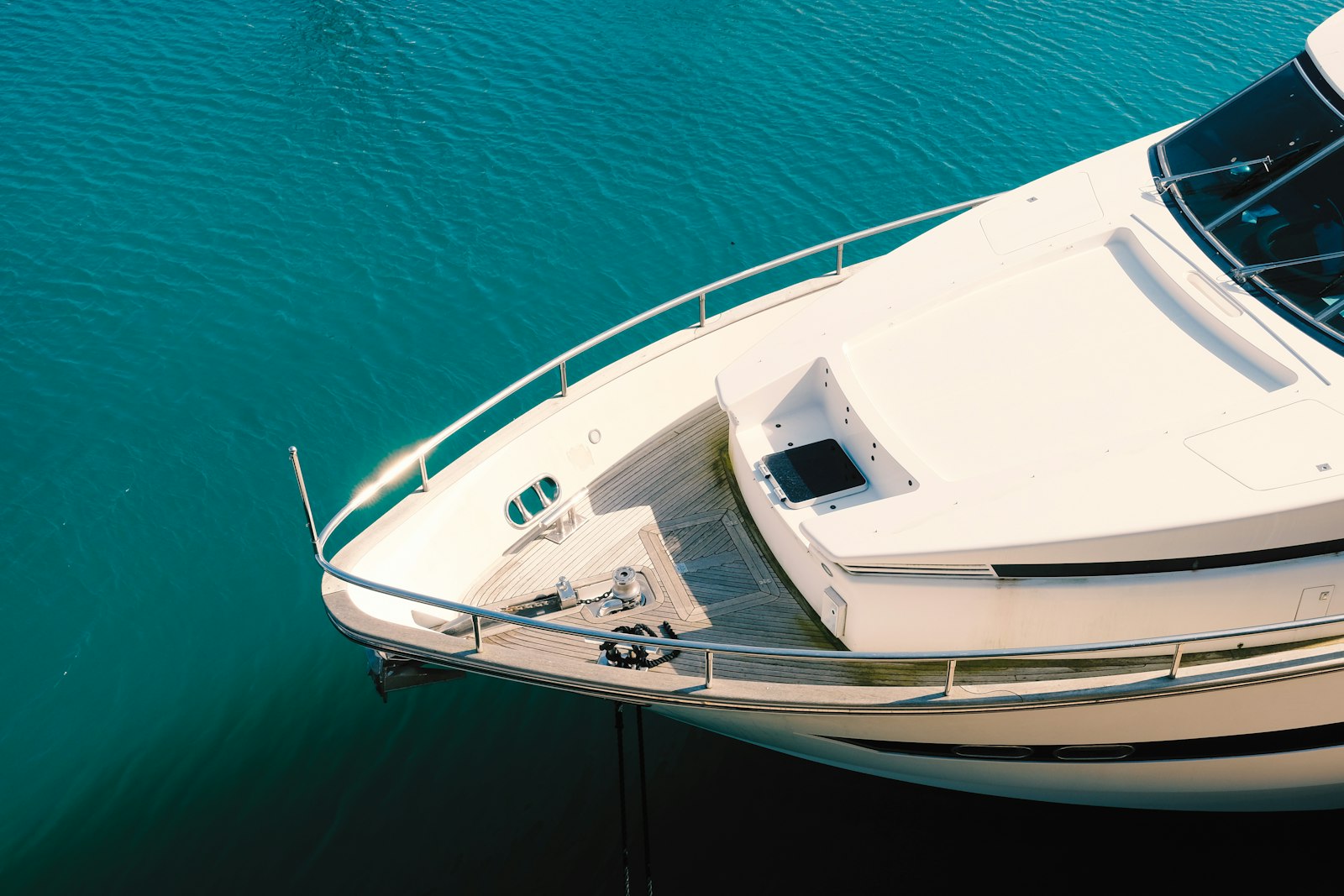
There is no official definition, which is why the labels in charter listings look inconsistent. The same forty-foot powerboat is a motor boat on one site and a motor yacht on another, and neither is wrong.
What matters for a booking is not the word. It is whether the boat is built for a day out or for living aboard, and that distinction is visible in the specification regardless of what the listing calls it.
What the sources actually say about size
The thresholds people quote are all over the place, and it is worth seeing the spread rather than trusting one figure.
One common rule of thumb puts plain motorboats up to about seven metres and motor yachts from around ten. Another says there is no fixed definition in terms of size or equipment, but that ten metres serves as a rough guide. Some brokers use thirty feet. Others reserve the word yacht for twenty-four metres and above.
That last figure has a legal basis rather than a marketing one: at twenty-four metres a vessel stops being classed as a recreational craft under EU rules and falls under commercial regulation. It is the only hard line anywhere in the question, and it sits far above anything most charter guests will book.
So the practical answer: around ten metres is where listings start saying “yacht”, and the word tells you very little by itself.
The distinction that matters: day boat or living space
This is the useful question, and the specification answers it.
A motor boat in the charter sense is built for being out for the day. Open or part-enclosed, a small cabin at most, a chemical heads or none, no generator. You go out at ten, swim in three bays, come back at six. For that it is excellent and it is far cheaper than anything with cabins.
A motoryacht is built for sleeping aboard. One or more decks, proper cabins with berths, real bathrooms, a galley, and the systems that make a week possible: a generator so the air conditioning runs at anchor, water capacity, refrigeration, usually a tender in a garage or on davits.
The generator is the single best tell. A powerboat with a generator is designed for nights aboard. One without is designed for days out, whatever its length.
At the top end the gap widens into a different product entirely — gyms, dive compressors, tenders and water toys in a garage — but that is superyacht territory and priced accordingly.
What each one costs to run
Both burn considerably more than anything with sails, and the difference between them is mostly a function of displacement and how hard you push.
A planing hull at cruising speed can drink one to three hundred litres an hour. That is the number that surprises people, and it is the reason powered charters are planned around short hops and long anchorages rather than distance. How fuel is charged covers which model applies; on a day boat it is usually inside the price, on a week-long motoryacht it is the largest variable you control.
A motoryacht also pays more in harbour, because berth pricing follows length and these boats are wide for their length — see mooring fees. And on a fully crewed boat, fuel and berths both come out of the advance allowance rather than your pocket week by week, which is set out in the APA explained.
A motor boat for a day costs a fraction of either, because the fuel is one tank and there is no crew, no generator and no deposit of consequence. A day against a week explains why the two are priced on different logic entirely.
Where each one is the right answer
Take a motor boat if you are staying ashore and want one good day on the water; if the group is mixed and some of them have no interest in boats; if you want to reach three bays rather than one. A motor boat in Croatia or a Greek day boat covers a surprising amount of coast in eight hours. At the cheapest end, a RIB does the same job faster, wetter and without shade — see what a RIB day actually involves.
Take a motoryacht if you want a week aboard with the comfort of a hotel and no interest in sailing; if air conditioning running all night at anchor is non-negotiable; if the group includes people who would be miserable on a heeling boat and you want more space than a catamaran of similar cost. A Croatian motor yacht or a Greek one turns a scattered island group into comfortable day trips.
Consider neither if the sea itself is the point. The quiet is most of why people charter, and an engine removes it. The three-way comparison is the honest version of that trade-off, and the route through all eleven types is where to start if nothing is fixed.
The middle ground people miss
Two types sit between these and suit crews who think they want power.
A motorsailer gives you a capable engine, a sheltered steering position and the option of turning it off. For anyone attracted to a motoryacht because of weather protection rather than speed, this is frequently the better and much cheaper answer — what a motorsailer is explains why.
A power catamaran — listed under multihulls — keeps the level decks, the wide saloon and the shallow draft of a catamaran with no rig at all. For a family who want multihull space without any sailing, it beats a monohull motoryacht of the same length on deck area and on anchoring comfort. The multihull comparison covers where it fits.
What to check in the listing, whatever it is called
Six things settle what you are actually booking.
Generator, yes or no. Decides whether air conditioning works at anchor, which decides whether August nights are tolerable.
Cabin and bathroom count, and whether the showers are separate. On a week with six people this matters more than anything in the photographs.
Water tankage. Powerboats without watermakers run out, and refilling means a marina night you did not want.
Cruising speed and consumption at that speed. Not top speed. Ask for litres per hour at the speed you will actually use.
The tender and its outboard. On a boat that anchors, this is your transport. A soft dinghy with a 2.5hp engine and four adults is a bad evening.
Whether a licence is required. Powered boats above certain engine sizes need one in most countries, and the thresholds differ. What is actually required covers it, and taking a skipper removes the question along with the manoeuvring.
These belong alongside the rest of the pre-booking checks in the contract lines worth reading twice and the handover list in the check-in checklist. The fleet across the Mediterranean covers both types in depth; the labels will keep being inconsistent, and the specification will keep being accurate.