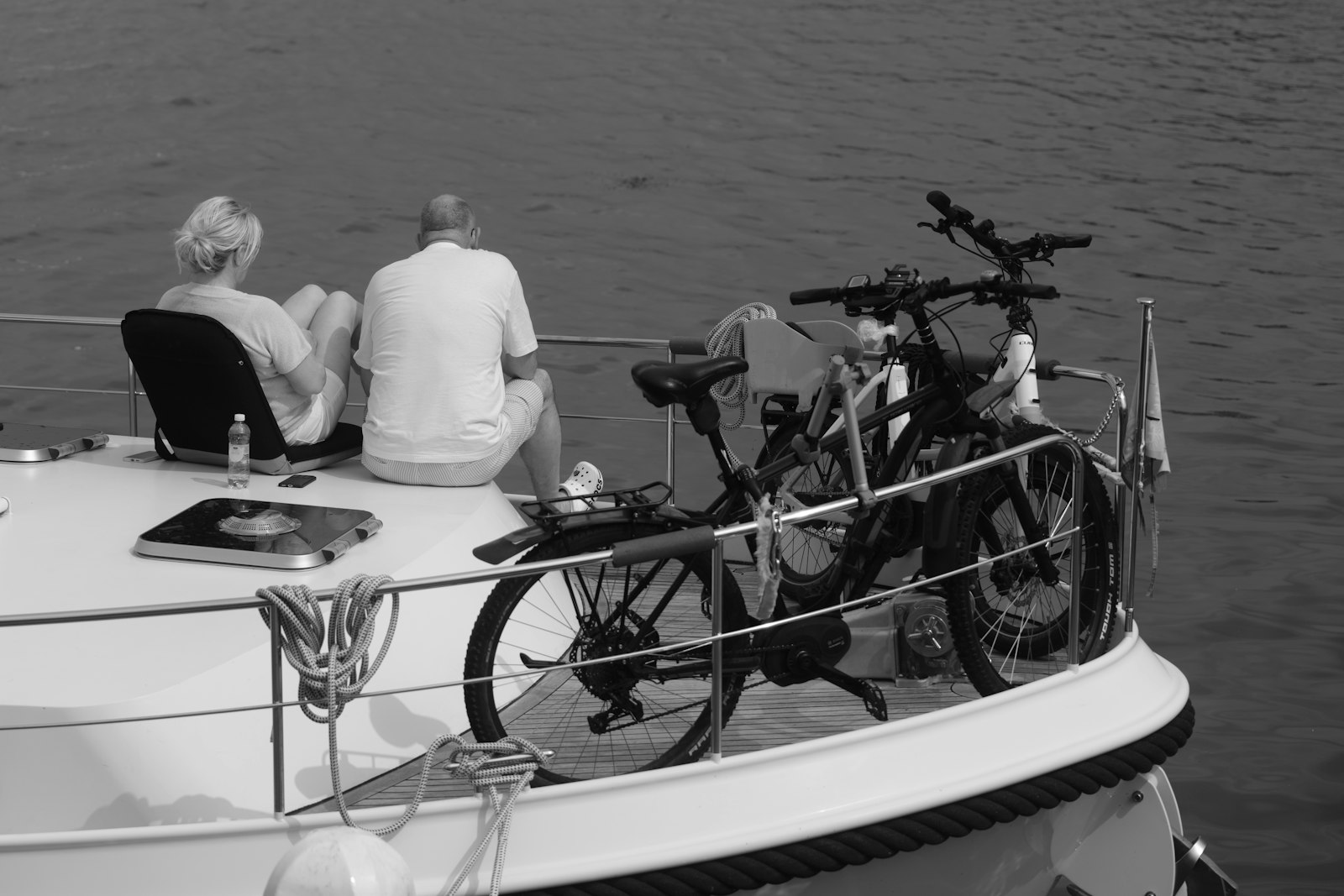
Most charter boats do not take dogs. A minority do, the arrangements are more formal than people expect, and the decision is usually the owner’s rather than the operator’s — which means the answer varies boat by boat rather than company by company.
If you want to bring an animal, the sequence is: tell the broker first, sort the paperwork second, and pick the boat last.
Why most boats refuse
Damage and insurance, in that order. Upholstery, teak and sail covers are expensive, a bored dog is destructive, and pet-related damage is frequently excluded from the boat’s insurance policy altogether — which means it lands on you in full rather than on the underwriter.
That exclusion is the thing to check before anything else. If the policy does not cover it, your exposure is not limited to the deposit, and it is worth reading that clause alongside the others in the contract lines worth reading twice and how the deposit works.
On a crewed boat there is a second layer: the crew can decline an animal that compromises safety, hygiene or other guests’ comfort, and they are entitled to. On bareboat the owner’s own risk appetite decides.
The paperwork, which is the real constraint
Border rules apply to the animal regardless of what the boat’s owner says, and they are not quick to arrange.
In the Mediterranean the European Pet Passport scheme covers most of the charter region and requires current rabies vaccination among other things. The timing is the catch: a first rabies dose frequently has to be given months in advance to be valid, so this is a decision made in winter for a summer charter, not in May.
Elsewhere it is harder. Caribbean islands issue permits on the basis of health tests and certification, with the British Virgin Islands additionally requiring a vet examination at the port of entry. The United States expects proof of rabies vaccination. Australia and New Zealand charge a fee and quarantine on arrival, which makes a short charter effectively impossible.
And the consequence of getting it wrong is specific: without the right documents the boat can still enter port, but the dog cannot go ashore. A week with an animal confined to the boat is not a holiday for anybody.
Check the rules for every country on the intended route, not just the base. This is one of several reasons that a cross-border plan needs agreeing before booking — see the paperwork and borders.
What an operator will ask you for
On the boats that do accept pets, expect a process rather than a note on the booking.
Records: current rabies vaccination, routine shots, and microchip details. A recent health certificate is often requested, particularly for multi-day charters.
A pet waiver to sign, and an emergency contact who could collect the animal if it came to that.
Breed and weight declared honestly, plus an assurance that the dog is fully house-trained. Larger or high-energy breeds may be asked for evidence of basic obedience or crate training.
A substantial deposit. This is where it gets real: one broker reported a five-thousand-dollar deposit on a thirty-metre motor yacht, fully refunded at the end. Confirm the amount, when it is due, and whether it is refundable.
Some operators also ask for a reference from a previous charter, which sounds extraordinary and is simply how the few pet-friendly boats protect themselves.
Life aboard with a dog
Three practical problems, all solvable.
The toilet. Dog-friendly boats frequently provide a patch of artificial grass on the foredeck, which works better than it sounds once the animal accepts it. If the boat does not have one, bring a portable dog toilet. Relying on going ashore twice a day constrains the whole route.
The companionway. Yacht steps are steep and narrow and most dogs cannot manage them. A plank or ramp solves it; without one you are carrying the animal up and down several times a day, which is fine for a terrier and not for a labrador.
Panic. A frightened animal on a moving boat can hurt itself or somebody else. The crew will brief you on leashing, on which areas are off limits, and on where the dog goes during manoeuvres — the same logic as the protected spot for a small child in sailing with a baby.
A dog life jacket with a handle is worth bringing. Getting an animal back aboard from the water without one is genuinely difficult.
Which boat type suits an animal
This is where the choice narrows usefully.
A catamaran is the best answer by some distance: level decks so the dog is not sliding, a cockpit on the same level as the saloon so no steps, wide side decks, and a swim platform that doubles as a way back aboard. Croatian catamarans and Greek ones are where to look first.
A motoryacht works for similar reasons, with the addition of air conditioning at anchor — which matters more for a dog than for a person in August.
A gulet has wide flat decks and a crew used to accommodating requests, and the larger ones have room for an animal to be out of the way.
A houseboat is the easiest of all: flat water, no heeling, and a bank to step onto several times a day. For an older or nervous dog this is the honest recommendation — see what a houseboat holiday involves.
A heeling monohull is the hardest: sloping decks, a steep companionway and nowhere flat. Possible with a small, sea-used dog and unpleasant otherwise.
Is it fair on the animal
Worth asking honestly, because the answer is not automatically yes and nobody at a charter company will raise it.
A boat is hot, confined, moves unpredictably and offers no escape. Some dogs adapt within a day and spend the week asleep in the shade of the cockpit. Others pant, pace and do not settle, and there is nowhere for them to go.
The dogs that do well are generally calm, used to car travel, indifferent to water and already comfortable in unfamiliar places. The ones that struggle are anxious, noise-sensitive, or large enough that the companionway and the tender become a problem several times a day.
Heat is the specific risk people underestimate. A fibreglass deck in August is hotter than tarmac, and a dog with no shade and no cool floor is in genuine difficulty. A boat with a generator and air conditioning that runs at anchor is not a luxury here — it is the thing that makes the week viable, which is why the motoryacht and larger multihull fleets are where most pet-friendly boats sit.
And one practical point: in July and August the midday heat limits what you can do ashore too, since you cannot leave the animal aboard in the sun or in a car. Shoulder season solves most of it — late May, June, September and early October are better for a dog in every respect, and cheaper, as in autumn chartering and how season bands work.
Where to go with a dog
Route choice matters more than usual, because the limiting factor is getting ashore several times a day.
The Ionian is the easiest sea-going option: short hops, free town quays where you step straight onto land, and harbours an hour or two apart. Lefkada and Preveza are the practical bases.
In Croatia the channels of the north — Zadar, Biograd — work for the same reason, with villages close together. Avoid routes built around remote anchorages: the Kornati are magnificent and have almost nowhere to walk a dog.
Avoid the exposed groups entirely. A day pinned in harbour by wind is tedious with people and worse with an animal — which rules out most of what is described in the Dodecanese in high summer.
How to go about it
Tell the broker about the dog in the first conversation, with its size, breed and temperament. Brokers can search multiple boats and know which crews routinely host animals, and that is a faster route than filtering listings yourself — pet-friendliness is rarely a searchable field.
Then confirm, in writing: that the boat accepts the animal, what the deposit is, whether pet damage is insured or excluded, whether a toilet patch is provided, and what the entry requirements are for every country on the route.
And consider the shorter version first. A day charter tells you whether your dog tolerates a boat at all, for a fraction of the commitment — and a great many owners discover their animal hates it. The fleets are at Croatia, Greece and across the Mediterranean, and if the type is still open, the route through the options starts one step earlier.