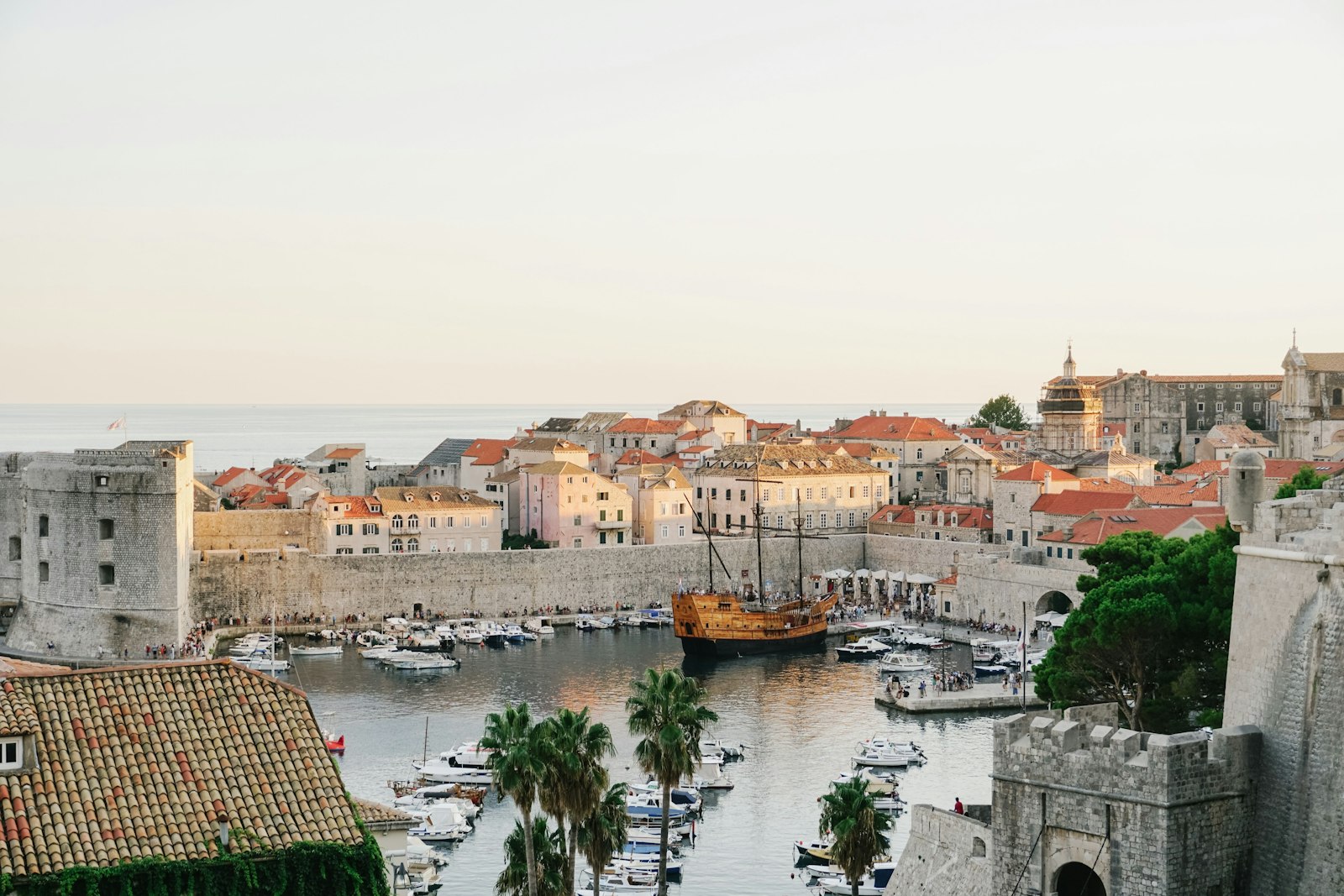
Istria is the part of Croatia that does not look like the brochure. There is no dense island chain, the coast is open, the towns are Venetian rather than Dalmatian, and the food is closer to Italy’s than to anything further south — truffles, olive oil, fish cooked plainly.
It is also the only Croatian charter area most central Europeans can drive to, which is quietly the main reason it exists as a base.
Why it sails differently
The defining fact is the absence of islands. From Split or Zadar you sail between chains with shelter on both sides. Here the coast is open water with towns along it, and the only archipelago is the small Brijuni group off Fažana.
Three consequences. The sailing is more exposed, which experienced crews prefer and nervous ones do not. Distances between stops are longer — eighteen to twenty-five miles rather than eight. And the week is a coastal passage rather than an island-hopping loop, which is a different shape of holiday.
It is also less crowded than central Dalmatia in July, which is the single best argument for it.
Where you start
Pula is the main base and has several marinas. Marina Veruda sits in a sheltered bay on the southern tip of the peninsula and holds the largest charter concentration. ACI Marina Pula is in the city itself, below the Roman amphitheatre. Marina Polesana and the Trget port are the smaller options.
ACI Marina Pomer, about ten kilometres from the old town, is the other common choice, and from there boats can head either south towards the Kvarner gulf or west up the Istrian coast.
ACI Marina Rovinj is the alternative base and one of the best-equipped marinas on the Croatian coast, immediately beside the old town — which makes Rovinj the better of the two towns to start or finish in.
Getting here: Pula has its own airport with seasonal flights. Trieste, Ljubljana, Venice and Zagreb are all within driving distance, and a large share of guests arrive by car, which is almost unique among Croatian bases.
The standard week
The route is a coastal run north and back, and the distances are known.
Pula to Rovinj is eighteen miles. Rovinj to Poreč is twenty. Poreč to Umag is twenty-five. Umag to Novigrad is fifteen. Add the Fažana channel and the Brijuni islands at the southern end and you have a week.
Rovinj is the highlight and deserves two nights — a peninsula of tall houses packed around a church on a hill, the closest thing in Croatia to a Venetian island town.
Poreč and Novigrad are smaller, flatter and more resort-like, pleasant rather than remarkable. Umag is the northernmost and the most developed.
The Brijuni islands are a national park, formerly Tito’s private retreat, with a landscape of parkland and Roman ruins and a strange collection of animals left from a state menagerie. Entry is charged, as with the other parks — see the charges and documents.
South of Pula, Medulin and the Kamenjak headland give you the one genuinely wild stretch of coast in the region.
Pula itself, which is the surprise
Most charter bases are towns you leave. Pula is a city with a Roman amphitheatre standing almost intact in the middle of it — the sixth largest surviving anywhere, still used for concerts — plus a triumphal arch, a temple on the forum, and an Austro-Hungarian naval quarter underneath the later layers.
It was the main port of the Austro-Hungarian navy, which is why the architecture jumps from Roman to late nineteenth century with little in between, and why the harbour is as large as it is. The market hall is cast iron and glass and worth the walk.
Practically: this is a city that works in October, with restaurants open and a population that lives there. That is unusual among Croatian charter bases, most of which thin out when the season ends, and it makes an extra night at either end genuinely worthwhile.
The food, which is a reason on its own
Istria is the one part of Croatia people travel to specifically to eat, and it is worth building a day around.
The interior produces white truffles in autumn and black through much of the year, olive oil that wins international awards, and a red wine from the teran grape that is unlike anything on the Dalmatian coast. The seafood is cooked more plainly than further south — grilled, with oil and nothing else.
The practical implication for a charter: the best eating is inland, in hill towns like Motovun and Grožnjan, not on the waterfront. If that matters to you, plan a day with a hire car from Rovinj or Pula rather than expecting to reach it by boat. Provisioning is correspondingly good — see how to stock a boat, which is easier here than in the islands where the shop is a shed.
Crossing borders, and why to ask first
Istria is a peninsula with Slovenia at the top of it and Italy an afternoon’s sail beyond. People ask about both.
Some charter boats here are permitted to cross into Slovenian or Italian waters and many are not. It depends entirely on the specific boat’s paperwork and the operator’s agreements, and it must be confirmed before booking rather than proposed on the second morning. This is more often possible from Istria than from anywhere else in Croatia, which is a real attraction if Venice or Piran is on your list — but it is never a default.
The same principle as everywhere: proximity is not permission. The formalities are in the paperwork, and the limits on cruising area in the contract lines worth reading twice.
Weather, and the thing to know about the north Adriatic
Pula has a mild Mediterranean climate with warm summers, and the summer pattern is the familiar maestral — a northwesterly filling in through the afternoon.
Two local realities. The northern Adriatic gets more rain than the rest of the coast, which matters if you are booking shoulder season — see sailing in October and November. And the bora is stronger here than further south, falling off the mountains across the Kvarner gulf with real force. In an open-water cruising ground with few islands to hide behind, that is a more serious planning factor than in Dalmatia, and it argues for having somebody aboard who reads a forecast properly — see what a skipper is for.
The season runs May to September. When to sail in Croatia covers the choice of fortnight, and how season bands work the price consequence.
Which boat
Open water and long legs change the answer from what it would be in the islands.
A sailing yacht from Pula in the low forties or above is the right call — enough waterline for a twenty-five mile day in a chop, which a smaller boat turns into a long afternoon. This is proper coastal sailing rather than pottering, and it is where a cruiser with a sheltered cockpit earns its keep; the cruiser against the performance yacht covers that distinction.
A catamaran from Pula suits families and anyone who will not tolerate heel on a long exposed leg, with the usual trade in berth cost — see multihulls, mooring fees and what one costs.
A motor boat from Pula makes real sense here, more than in the islands, because the distances are long and the stops are towns rather than anchorages. Fuel becomes a serious line — see the fuel policy and where the motoryacht line falls.
If the type is open, the route through the options is the first decision.
Istria or further south
Choose Istria if you can drive to it, if you want Venetian towns and Italian food, if you would rather sail open water than thread channels, or if you want July without the Dalmatian crowds.
Choose Kvarner — Opatija, Punat and the islands of Krk and Cres — if you want islands but still want the north; it is the next gulf south and has the archipelago Istria lacks.
Choose Zadar, Biograd or Trogir if the islands are the point. The Kornati and the Split islands are what Istria does not have, and for most first-time visitors to the Adriatic they are the right answer. The full fleet is at Croatia.